

An article from last month in the London Times evaded myself and my network of informers. If you have access, you can read the article here. As usual, there is a lot of fluff and context in there which readers of Crime Guy will already know. But there is one stick of dynamite.
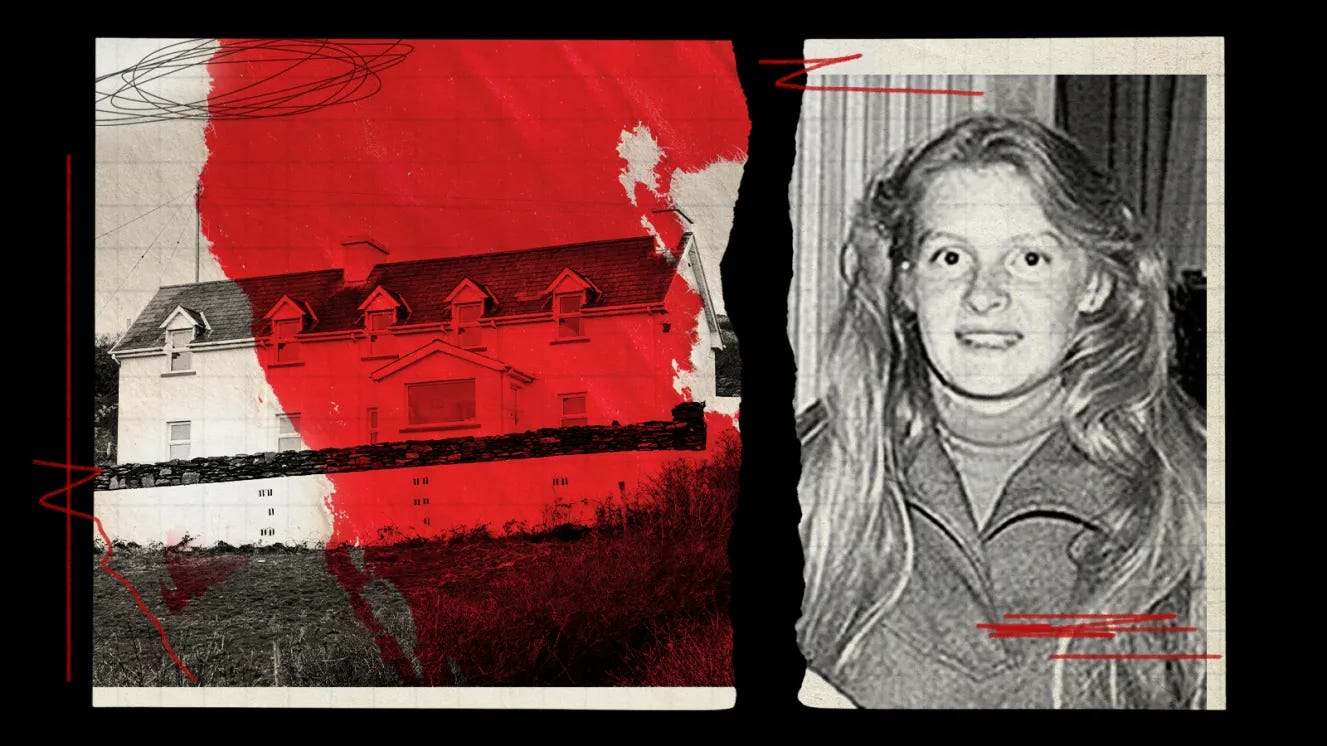
Readers should be aware that the journalist behind the piece is Michael Sheridan, who wrote a comprehensive and compelling account of the killing of Sophie Toscan du Plantier. Unfortunately I found his account, written not many years after the murder, to be somewhat anti-Ian Bailey.
It is staggering therefore that the tone of this new article is measured, and implicitly exonerates Ian Bailey without doing so explicitly. The new information claims that a reliable witness, who has been re-interviewed as part of the cold case review, now recalls receiving a landline phone call at 6am on the morning Sophie’s body was discovered in the laneway beneath her cottage.
This is several hours earlier than any other witness has publicly admitted knowledge of the murder. It means that Sophie was discovered hours earlier than previously thought, and means that news of her death was circulating before Sheila Foster found her body in the lane.
There are two possibilities. The person who called the witness is the killer (or someone collaborating with the killer) or they are at least a witness. We need to be careful: recollections vary and we cannot prove the time of the call. Even at the time phone records were patchy and unreliable. Mobile phones were practically unheard of and a recent news article excitedly proclaimed that dial-up internet had just landed in West Cork, in 1996.
The witness mentioned here knew of Sophie and is presumed to have known Sophie since she first arrived in Ireland, around 1993. This is the line that indicates the caller was not Ian Bailey, with my italics: “I was asked about a local man with a questionable past and inclination to violence but now long dead and what I thought of him.”
Another point of extreme interest is that the caller has now been identified and is still alive. Assumptions might be made about the age of the caller in 1996 and their age today. Someone in the 40s then would be over 70 now, but these dates rule out large swathes of deceased former suspects, including Bailey, and Alfie Lyons.
What the article does not claim is that the caller is the killer, or even knew the killer. We know the caller is not anyone deceased. We know they are local to the area and knew Sophie. We do not know if it is a man.
But this article opens the door to numerous possibilities. It suggests that in the December pre-dawn darkness, someone knew Sophie was dead long before Shirley Foster opened her eyes.
The agitated nature of the call is consistent with that person having seen the body, or at least having been given such details as to become agitated by the news. Their agitation perhaps suggests they fully believed what they had been told, even if they were not an eye witness themselves.
I believe this is the most substantial news yet received about the cold case investigation and the bearer of this news, Michael Sheridan is a very thorough journalist with strong local connections. I always appreciated and valued his book, even if we could not agree on his suspect, Ian Bailey. His tone this time is neutral and detached, and he does not retract his earlier suspicions, but the reader may join their own dots.
It might be added that the chance of an unconnected bystander discovering Sophie's body at 6am in the dark in the middle of nowhere is virtually inconceivable.
It's become absolutely clear that Ian Bailey didn't commit the murder.
They accused him of a horrific murder, they had no proof, no credible evidence against him, and they ruined his life completely.